Wolf Cooktop Repair
Gas Cooktop Keeps Clicking? Wolf Burner Checks That Stop It
A gas cooktop keeps clicking when the spark cannot reach a dry, clean, centered burner or a knob switch is stuck, so dry the burner, reseat the cap and clean the igniter first. Here is how Phoenix owners of Wolf and other cooktops sort it out safely.
Written by
Thandiwe Mokoena
Cooking-appliance technician — convection and airflow · 16 years in the trade
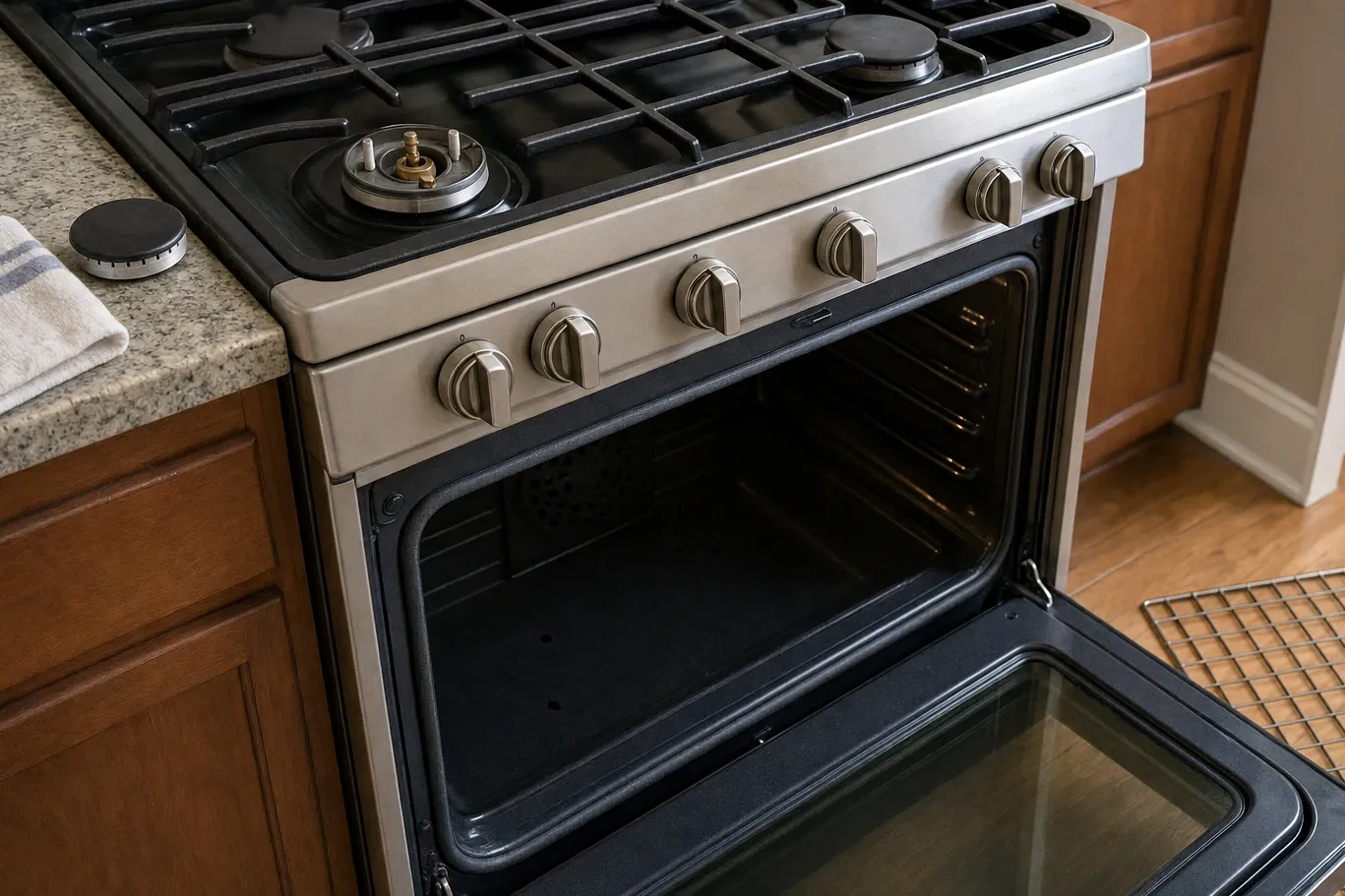
A gas cooktop that keeps clicking means the igniter is sparking but the burner either never lights or never holds a steady flame against the electrode, or a knob switch is stuck closed. Usually the cause is small and fixable at home: a wet igniter after a boil-over or a wipe-down, a burner cap sitting crooked, grease on the electrode, or a knob that has not sprung back. Phoenix tap water is hard, so when a pot of pasta water foams over, the puddle dries into a chalky white film that can coat the igniter tip and weaken the spark. The sections that follow run through the checks in the order worth trying them, explain how much clicking a Wolf cooktop or range makes on purpose, and mark the line past which the job belongs to a technician.
Normal clicking versus a real fault
Some clicking is by design. On most sealed-burner cooktops, turning a single knob sets every igniter sparking at once because they share one spark module, and only the burner receiving gas catches. A Wolf gas burner should light in about three to four seconds. A propane unit may take slightly longer on its first light of the day. On a Wolf rangetop, expect the burner to light within 3-5 seconds of the knob reaching Hi, with the igniter clicking until it does.
Wolf also builds in automatic reignition: if the flame wavers, or the electrical path between electrode and burner changes, the igniter clicks again to relight it, so a few brief clicks mid-simmer are expected. What is not normal is clicking that keeps going once a steady, even flame is burning, a burner that clicks and never lights, or sparking with every knob turned off.
Burner clicks but will not light: the owner checks
Work through these with the knobs off and the burners cold.
- Dry it out. Water from a boil-over or a cleaning sponge is the most common culprit. Lift off the grate and cap, blot the burner base, and run a hairdryer on its low setting over the igniter and the ports for a few minutes.
- Seat the cap. The cap should rest flat and centered on the burner head without rocking. A cap even slightly off its seat spreads gas unevenly, so the flame never wraps around the electrode.
- Clean the electrode. If the ceramic igniter is crusted with food or that mineral film, scrub it gently with a soft-bristle toothbrush.
- Skip the foil. Never line the burner pan with aluminum foil. It can block air and interfere with the spark.
- Reset the power. Wolf igniters are electric and cannot spark without current, so switch off the breaker for at least 30 seconds and then back on to reset the spark module.
If none of them light and you hear no gas at all, check that your other gas appliances work and that the shutoff valve behind the cooktop is open. On a newly installed unit, confirm it was set up for the gas type your home actually uses, natural gas or propane.
Clicking that keeps going after the flame lights
When the burner lights but the clicking carries on, the flame is not staying in solid contact with the electrode.
- A pan too big for the burner. An oversized stockpot or a wide griddle pan can starve the flame of oxygen, so it lifts off the ports and the igniter keeps trying to relight it. Move to a larger burner or a smaller pan. Before using the charbroiler, Wolf suggests turning the hood on 5 minutes ahead so air is already moving around the cooktop.
- A knob not quite where it should be. If a Wolf range charbroiler clicks without stopping, make sure its knob is turned all the way to Hi. For any burner, push the knob in and let go to confirm it springs back fully, because a sticky knob can hold the spark switch closed.
- A dirty or damp simmer path. If a low flame goes out and the burner pops as it relights, clean and dry the burner assembly, the well beneath it and the igniter, then seat each piece flush. Our guide to a Wolf simmer burner that will not hold a low flame covers that problem in more depth.
Clicking with every knob turned off
A cooktop that sparks when nobody is cooking usually has moisture in a knob switch. Liquid that runs down a valve stem after a spill, or a knob that went through the dishwasher, can bridge the switch contacts. Wolf’s care advice is to wipe knobs with a damp cloth and keep them out of the dishwasher, and to wash grates at the sink with hot water and mild detergent instead of soaking them.
Turn the breaker off and give the switches a full day to dry. If the clicking returns once power is restored, Wolf points to the outlet itself: have its wiring and polarity checked, and if the appliance still sparks when it is not in use, bring in an electrician. A switch that stays shorted after drying has to be replaced.
Where owner checks stop: the gas-safety line
The clicking is not the hazard; unburned gas is. If a burner clicks for more than a few seconds without lighting, turn the knob off, wait a few minutes for the gas to disperse, and only then try again.
If you ever smell gas near the cooktop, stop troubleshooting completely. Do not light any appliance, flip a light switch or use a phone anywhere in the house. Get everyone outdoors, then phone the gas utility using a neighbor’s line, and ring the fire department if the utility does not pick up.
During a power cut, a Wolf gas cooktop can still be used: turn the knob to HI and light the burner with a long multi-purpose lighter.
When it is a part rather than a cleaning job
If a burner is clean, dry and properly capped and still misbehaves, the cause is usually a cracked or loose igniter, a failing spark module, a shorted knob switch or a partly blocked valve or orifice. A cracked igniter should never be glued or taped; it needs replacing. Our technicians cover Arcadia, Biltmore, North Central Phoenix and Ahwatukee, and the cooktop repair service page sets out how one of those appointments runs.
| Repair | Typical range |
|---|---|
| Igniter or spark module | $170–$450 |
| Burner valve or orifice service | $240–$600 |
Treat both rows as typical spreads, not as quotes. A fixed price waits until the technician has traced the fault, which is what the flat $89 service call pays for; approve the repair and that $89 is subtracted from it. If the burners sit on a full range rather than a built-in cooktop, the range repair page deals with the same faults.
Follow-up questions
- Should I worry when a gas stove keeps clicking?
- The spark on its own is not the hazard, but gas flowing without a flame is. If a burner clicks for more than a few seconds and never catches, turn the knob off and let the air clear for a few minutes before you try again. If you smell gas, touch no switches, leave the house and call the gas supplier from a neighbor's phone.
- Why does my gas cooktop click when every knob is off?
- Moisture inside a knob switch is the usual reason a cooktop sparks with all the knobs off. Switch the breaker off and give the switches a full day to dry out. If it still sparks once the power is back, Wolf advises having the outlet wiring and polarity checked, and calling an electrician if it keeps sparking while unused.
- Is it normal for all the burners to click when I light only one?
- Yes, on many sealed-burner cooktops every igniter sparks together because they run off one shared spark module, and only the burner that is getting gas lights. The clicking should stop within a few seconds once that flame is steady.
- Why did my stove start clicking right after I cleaned it?
- Water or cleaner left around the igniter or under the knobs is what makes a cooktop click after a wipe-down. Lift the caps, blot everything dry, run a hairdryer on low over the igniter and burner base, and reseat each cap flat.
- What does it cost to fix a clicking igniter?
- Replacing an igniter or spark module typically runs $170–$450 as a guide figure rather than a quote. The real price is set only after a technician pins down the fault on the flat $89 diagnostic call. Go ahead with the fix and that call fee is taken off its price.